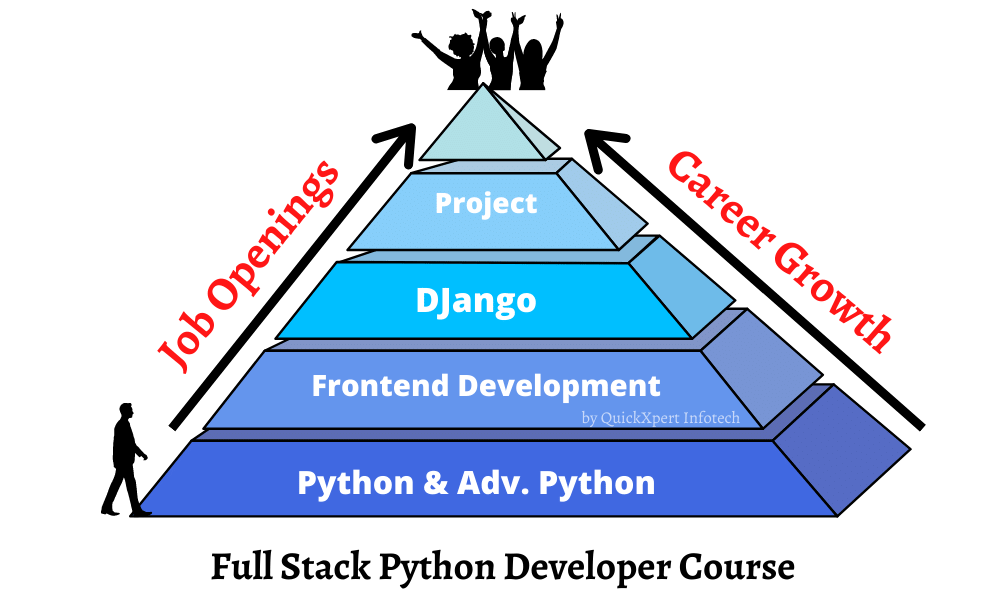
Becoming a Python full stack developer involves acquiring proficiency in both frontend and backend web development using the Python programming language. Here's a step-by-step guide on how to become a Python full stack developer:
Learn Python Programming:
Start by mastering the fundamentals of Python programming language. Learn about data types, variables, control structures, functions, and object-oriented programming (OOP) concepts.
Understand Frontend Development:
Familiarize yourself with frontend technologies such as HTML, CSS, and JavaScript. Learn how to create and style web pages, handle user interactions, and make web pages responsive.
Learn a Frontend Framework:
Choose a frontend framework like React.js, Vue.js, or Angular, and learn how to use it to build dynamic and interactive user interfaces for web applications. These frameworks offer powerful features for state management, component-based development, and routing.
Study Backend Development:
Dive into backend development using Python. Learn about web frameworks like Django or Flask, which provide tools and libraries for building web servers, handling HTTP requests, and interacting with databases.
Database Management:
Learn about relational databases (e.g., MySQL, PostgreSQL) and NoSQL databases (e.g., MongoDB). Understand database concepts, design database schemas, and learn how to perform CRUD (Create, Read, Update, Delete) operations using SQL or ORM (Object-Relational Mapping) libraries.
API Development:
Learn how to design and implement RESTful APIs (Application Programming Interfaces) using Python and frameworks like Django REST Framework or Flask-RESTful. APIs enable communication between frontend and backend components of web applications and facilitate integration with third-party services.
Version Control:
Familiarize yourself with version control systems like Git and platforms like GitHub or GitLab. Learn how to create repositories, manage branches, and collaborate with other developers using version control tools.
Deployment and DevOps:
Learn about deployment techniques and DevOps practices for deploying web applications to production environments. This may include containerization (e.g., Docker), continuous integration and continuous deployment (CI/CD), cloud platforms (e.g., AWS, Azure, Google Cloud), and server management.
Build Projects:
Practice your skills by building real-world projects that integrate both frontend and backend components. Start with small projects and gradually increase the complexity as you gain experience. Showcase your projects in a portfolio to demonstrate your skills to potential employer
Continuous Learning:
Stay updated on the latest developments, trends, and best practices in Python, web development, and software engineering. Participate in online communities, forums, and meetups to network with other developers and learn from their experiences.
Seek Internship or Entry-Level Positions:
Look for internship opportunities or entry-level positions as a Python full stack developer to gain hands-on experience in a professional work environment. Apply for positions that match your skills and interests, and be prepared to showcase your portfolio and demonstrate your abilities during interviews.
Continuously Improve:
Continuously improve your skills by seeking feedback, learning from your experiences, and taking on new challenges. Stay curious, experiment with new technologies, and never stop learning in your journey as a Python full stack developer.
These Python courses can be delivered through interactive lessons, hands-on coding exercises, and projects to keep students engaged and motivated. Additionally, providing resources like online tutorials, coding platforms, and reference materials can help students continue learning outside of the classroom.